
Human Rights Education
The Education Unit was established at the United Nations Human Rights Training and Documentation Centre for South-West Asia and the Arab Region in 2025, in line with the structure and organizational framework of the Office of the High Commissioner for Human Rights (OHCHR) at its headquarters in Geneva. The Human Rights Education Unit works to build partnerships with educational institutions, relevant ministries, universities, national human rights institutions, civil society, and youth-led organizations, with the aim of developing and designing programs and tools for human rights education targeting two main groups: youth and children.
The Unit’s framework of action is the World Programme for Human Rights Education (WPHRE), which was established pursuant to General Assembly resolution 59/113 (10 December 2004). OHCHR is responsible for coordinating the Program at the global level. The World Program seeks to promote a shared understanding of the principles and core methodologies of human rights education, provide a concrete framework of action, and strengthen partnerships and cooperation, moving them from the international level to the popular base level. The World Program is organized in successive phases with the aim of focusing national efforts on specific sectors and issues. The focus areas of the different phases are as follows:
First Phase (2005–2009): Human rights education in primary and secondary school systems.
Second Phase (2010–2014): Human rights education in higher education program for teachers and educators, civil servants, and law enforcement officials.
Third Phase (2015–2019): Strengthening the implementation of the first and second phases and enhancing the training of media professionals and journalists in human rights.
Fourth Phase (2020–2024): Empowering youth through human rights education.
Fifth Phase (2025–2029): Youth, including children, as priority groups; human rights and digital technologies; the environment and climate change; and gender equality.
The Education Unit has developed a strategy aimed at strengthening human rights education and applying its principles in the countries within the Centre’s mandate. This strategy defines the Unit’s role, approach, and expected outcomes, and serves as a tool for engaging the Office of the United Nations High Commissioner for Human Rights with youth, children, civil society, governments, and academic institutions. To achieve this, the Education Unit is based on three core components: children, higher education, and youth.
Children
The work with or for children aims to systematically and sustainably integrate the principles of human rights education into primary and secondary education systems, in both formal and non-formal education, based on the Action Plan for the first phase of the World Programme for Human Rights Education. This integration is a fundamental step toward building early awareness among children of their rights and duties, and toward fostering the values of human dignity, equality, non-discrimination, participation, and respect for others from the earliest stages of education.
Through this approach, the Unit works to promote a shared understanding of the principles and methodologies of human rights education, including the adoption of educational approaches based on participation, critical thinking, and interactive learning, and linking human rights concepts to children’s daily realities. It also seeks to support curriculum development, build the capacities of teachers and educators, and produce educational materials that take into account the cultural and social contexts of the Arab region.
The importance of working in partnership with relevant stakeholders, such as Ministries of Education, lies in their responsibility for setting educational policies, approving curricula, and ensuring the sustainability of integrating human rights into the formal education system. National Human Rights Institutions also play a central role in providing technical expertise, monitoring the situation of children’s rights, and ensuring that educational programs are consistent with international and national human rights standards. Cooperation with international organizations operating in Arab countries contributes to providing technical support and facilitating the exchange of experiences and international best practices, in addition to strengthening regional coordination. Meanwhile, engaging civil society organizations is essential to reaching all groups of children.
Higher Education
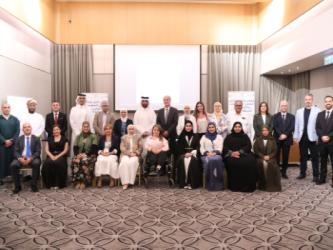
Work with higher education institutions within the framework of the Human Rights Education Unit and based on the Action Plan for the second phase of the World Programme for Human Rights Education, aims to strengthen the integration of human rights education in universities and higher education institutions in the Arab region as a core component of the educational and research process. This includes developing and enhancing relevant curricula and adopting educational approaches that encourage critical thinking, legal analysis, and open academic debate on contemporary human rights issues.
The Unit supports a range of academic initiatives that seek to link theoretical knowledge with practical application, such as organizing regional summer courses that bring together students and researchers from different countries in the region, moot court competitions that develop legal advocacy skills and understanding of human rights protection mechanisms, as well as specialized lectures and research programs that contribute to the production of solid academic knowledge responsive to human rights challenges in the Arab context.
The importance of working with universities, law faculties, and human rights programs lies in their role as essential spaces for shaping future generations of students, academics, and human rights actors. Higher education institutions also play a pivotal role in consolidating a culture of human rights and in promoting the values of freedom, intellectual independence, and respect for pluralism within societies.
Building partnerships with reputable universities and academic institutions contributes to the exchange of expertise and best practices, strengthens regional and international cooperation, and supports the development of educational programs with sustainable impact. Such partnerships also help expand outreach to students and researchers and enhance human rights education in line with international standards.
Accordingly, engagement with higher education institutions constitutes a fundamental pillar for strengthening human rights education in the Arab region and contributes to preparing academic and professional cadres capable of defending human rights.

Summer Course
Annually The Centre hosts its flagship regional Summer Course titled “Introduction to the International Human Rights System,” for the youth in the Arab region, in partnership with The Global Campus for Human Rights Arab world and the University of Saint Joseph in Beirut, Lebanon. The course aimed to enhance participants' understanding of human rights concepts, principles, standards, and mechanisms, as well as build practical skills for professional development and open dialogue with human rights actors

Moot Court
The regional Arab Moot Court competition for Human Rights is an annual competition hosted by the Centre to enhance university students’ understanding of human rights principles, treaties and engagement with international human rights mechanisms.

Career Fair
The Centre’s participation in career fairs to give students an opportunity to learn more about the different types of jobs in the human rights field and internship opportunities offered at the Centre.
Youth
The youth component of the Human Rights Education Unit falls within the Centre’s vision of empowering young people as key partners in the promotion and protection of human rights in the Arab region. Based on the fourth and fifth phases of the World Programme for Human Rights Education, this component focuses on building youth capacities, supporting their initiatives, and ensuring their meaningful participation in human rights work and decision-making.
The Youth Strategy 2026 reflects the Centre’s commitment to engaging youth and youth-led organizations in a systematic and sustainable manner, in line with the United Nations Youth Strategy and the principles of inclusion, diversity, and meaningful participation. The strategy aims to equip young people with the knowledge, skills, and tools necessary for human rights education and advocacy, and to strengthen their role as agents of change capable of creating positive impact within their communities and at the regional level.
Through networking with youth organizations across Arab countries and through the Centre’s diverse activities, including dialogue seminars, capacity-building initiatives, creative projects, and youth networks, the Centre seeks to entrench a culture of human rights among young people and to enhance their active contribution to advancing human rights and promoting the values of justice, equality, and dignity for all.

Webinars
The Centre organizes webinars and seminars quarterly. These webinars focus on empowering youth, raising awareness, and advancing activism for the protection and promotion of human rights.

Film competition
Human Rights Through The Lens of Youth

Film Screening
The program includes human rights films prepared by young filmmakers who participated in previous regional human rights film competitions organized by the Centre, in addition to screenings of human rights films produced by partner film institutions, such as the Festival and International Forum on Films and Human Rights (FIFTH). The program aims to provide a platform for artistic expression and to highlight youth issues and human rights in the Arab region.

World Scout Movement
The Centre’s participation in events hosted by the World Organization of the Scout Movement.