

The Guide

The Guide
The Centre and the Arabic Network for National Human Rights Institutions’ work with Ministries of Educations and National Human Rights Institutions regarding the guidance manual on "Best Practices and Experiences in the Arab Region in the Field of Human Rights Education in Primary, Preparatory, and Secondary Schools." The guide will be published during the year 2026.
Body
Background
Within the framework of cooperation between the Arab Network of National Human Rights Institutions (the Network) and the United Nations Centre for Training and Documentation in Human Rights for South-West Asia and the Arab Region (the Centre), and pursuant to the Memorandum of Understanding signed between them to promote human rights education, the Network and the Centre will organize a number of activities to develop a guide manual on “Best Practices and Experiences in the Arab Region in Human Rights Education in Primary, Lower-Secondary, and Secondary Schools.”
This initiative is based on the experiences of National Human Rights Institutions and Ministries of Education in primary, lower-secondary, and secondary schools, as well as on the principles and practical guidance of the Office of the High Commissioner for Human Rights (OHCHR) in this field.
The development of this manual comes as a follow-up to the recommendations issued by the Regional Dialogue Forum on “The Future of Education and Human Rights Education in the Arab Region: Toward a New Social Contract,” held in Cairo on 18–19 October 2023, with the participation and contribution of all active partners in education and human rights education in the region.
This initiative also falls within global efforts supported by OHCHR to implement the World Program for Human Rights Education across all sectors, established by General Assembly resolution 59/113 (10 December 2004), for which OHCHR is responsible for global coordination. The Program aims to strengthen the implementation of human rights education programs in all sectors and is organized in successive phases, focusing in its various stages on integrating human rights into education and training target groups. Its first phase focused on integrating human rights education into primary, lower-secondary, and secondary school systems. On 10 December 2004, the United Nations General Assembly proclaimed the World Program for Human Rights Education (ongoing since 2005) to advance the implementation of human rights education programs in all sectors.
The development of this manual also aligns with the Centre’s strategic plan on human rights education for the Arab region, which is consistent with the World Program for Human Rights Education. The Centre bears responsibility for human rights education in the Arab region and is mandated to “carry out human rights education activities and provide support to the efforts of governments, United Nations agencies and programs, national human rights institutions, and non-governmental organizations within the region.”
Overall Objective
Recognizing that human rights education strengthens values, beliefs, and attitudes that encourage all individuals to support their own rights and the rights of others, contributes fundamentally to preventing human rights violations in the long term, and represents an important investment in building a just society in which all human rights of all people are valued and respected. Moreover, National Human Rights Institutions play an important role in human rights education and in helping to develop programmes related to the teaching of human rights and related research, and in participating in their implementation in schools, universities, and professional settings, as stated in the Paris Principles. OHCHR also plays a key role alongside National Human Rights Institutions by developing guidance notes, methodological tools, best practices, and lessons learned on issues related to these institutions.
Based on the Cairo Forum recommendations, the Network and the Centre will work to develop a guidance manual on best practices in human rights education in primary, lower-secondary, and secondary schools in the Arab region, particularly in extracurricular programs and curricula. The manual will then be disseminated and shared with all stakeholders in human rights education to serve as a reference for developing programs and activities in line with national and local contexts.
The methodology for preparing the manual will rely on collecting experiences and expertise from the Arab region and on the Action Plan of the World Program for Human Rights Education. A draft of the manual will then be prepared and subsequently presented to all participating and contributing entities involved in its development and who participated in the Cairo Forum, with the aim of strengthening the integration of human rights education into extracurricular activities in primary, lower-secondary, and secondary schools in the Arab region, and enhancing cooperation and partnership-building between National Human Rights Institutions and Ministries of Education.
Specific Objectives
Follow up on the implementation of Recommendation No. 13 of the Cairo Forum, which calls for integrating human rights concepts into formal and non-formal educational programs and curricula, supporting the development of national strategies for human rights education, establishing implementation mechanisms, and allocating the necessary resources. This will be achieved through developing a guidance manual for Arab countries that includes various experiences and expertise of National Human Rights Institutions in integrating human rights education into extracurricular activities in primary, lower-secondary, and secondary schools, as well as OHCHR’s expertise in this field.
- Follow up on the implementation of Recommendation No. 15 of the Forum, related to raising awareness among pupils and students of the values of tolerance, citizenship, combating hate speech, openness to different cultures, and dialogue among civilizations, through activating the use of clubs and practical extracurricular activities to enhance the integration of human rights education.
Action Plan
This document sets out a detailed plan to begin the first phase of preparing the manual, which will involve all National Human Rights Institutions and relevant ministries/bodies in all Arab countries. This will be done by collecting key experiences, best practices, and efforts undertaken by National Human Rights Institutions and ministries to promote concepts of human rights education and then sharing them with all partners through a practical toolkit for teachers and school principals in primary, lower-secondary, and secondary schools to apply human rights education in extracurricular activities.
Methodology
- Communicating with all National Human Rights Institutions and Ministries of Education and sending a form or questionnaire to collect experiences and request submissions on their experiences in integrating human rights education.
- Compiling, reviewing, and analyzing the experiences to identify common elements, innovative approaches, and key success factors by experts, in accordance with the standards adopted by OHCHR within the Human Rights Education Program (Annex No. 2: United Nations Action Plan for the First Phase of the World Program for Human Rights Education).
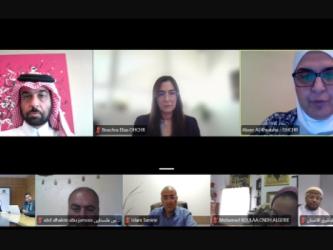
- Conducting an online workshop to derive recommendations and work toward issuing the guidance manual or a booklet that identifies best practices and provides practical recommendations for implementation, in addition to incorporating OHCHR’s expertise in this field (details regarding the modality and number of workshops to be determined later).
- Developing a strategy to disseminate the results to relevant stakeholders, including through publications and workshops.
- Encouraging and promoting the adoption of best practices at the national and regional levels and leveraging the influence of National Human Rights Institutions and OHCHR in this field.
Partners
- Arab Network of National Human Rights Institutions and National Human Rights Institutions
- Ministries of Education in the following Arab countries: Algeria, Bahrain, Egypt, Jordan, Lebanon, Morocco, Oman, Palestine, Qatar.
Audience:
School students.
Resources
Resource
Related Activities
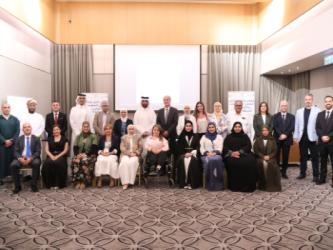
Development of a Guide on Best Practices in Human Rights Education Activities at School Level- Lebanon, 28-29 July
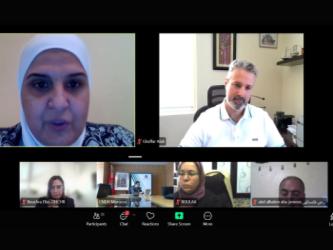
Developing a Guide on Human Rights Education activities at school level- Second Online Consultation – May 8, Online